Friday, August 28, 2015

Buhari approves 65 licences for private refineries


*Decision taken within 10 days in office
*DPR feigns ignorance
President Muhammadu Buhari has granted licences to 65 Nigerian companies to construct modular refineries.
The companies were selected from about 285 applications that were screened for the purpose.
Modular refineries are mini-refineries with capacities ranging from 1,000 to 10,000 barrels per day, bpd, which can be assembled and separated easily for enhanced performance and efficiency.

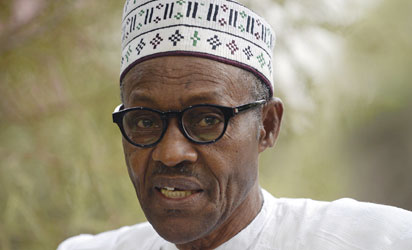
President Muhammadu Buhari


The decision to award Licence to Establish, LTE, which was taken within 10 days of his assuming office in June, may not be unconnected with his desire to see the increase in domestic refining capacity to meet local demand, thereby reducing huge import bills for subsidy.
Although the Department of Petroleum Resources, DPR, the industry regulator, feigned ignorance of the development, one of the beneficiary companies confirmed to Vanguard that the measure is also meant to cushion the impact of crashing oil prices at the international market.

The shock is not only in the period the approvals were given, but also in the numbers granted considering the fact that 18 LTEs were granted in 2002, but only one of them had come on stream with just 1,000 barrels per day, bpd, capacity.
The refinery is operated by Niger Delta Petroleum Resources, NDPR, which produces only automotive gas oil, AGO, popularly called diesel.
How approvals were granted
Chief Executive officer of the beneficiary company, who spoke in confidence, said the number was not unilateral, but “the mop up of all applications for private refining since 2007.”
He admitted that the process took a period of six months, dating back to former President, Goodluck Jonathan’s administration, adding “the process was rigorous as they looked at many issues including, land, investment, technical competence, design and a host of many others.”
He added that licences were offered on a two-year tenure, after which it will elapse, and that “the beauty of these awards is that there was no lobbying, as the whole exercise followed due process.”
In his opinion, there is nothing wrong with the high number of awardees, arguing that “for a country like Nigeria, the more in-country capacity, the better for us, because in a falling oil price regime, the more you refine, the more value you add and the more revenue you earn from your crude.”
DPR guidelines
A top management staff of DPR, when contacted, simply told Vanguard on telephone: “I am not aware of any such huge approval.”
When prodded further, he added: “What I know is that DPR recently released guidelines for the establishment of refineries, and we had road shows in Lagos, Port Harcourt and Abuja, to sensitise investors.”
Ordinarily, there are three levels of approval for setting up private greenfield (new) or modular refineries in the country.
They are Approval to Establish, LTE; Approval to Construct, ATC, and Licence to Operate, LTO.
An investor must overcome the requirements in each level of approval before proceeding to the next, as shown in the guidelines.
DPR had explained that the guidelines for the establishment of modular refineries in Nigeria was configured with the aim of shortening the approval time for licensing of refineries.
To woo investors to the project, DPR also reduced the licensing fee for new refineries from $1 million to $50,000. Government is desirous of refining at least 50 percent of its crude output in-country, not only to reduce import dependence, but also be an exporter of refined petroleum products.
Challenges
Also confirming the development, a petroleum expert from the Emerald Energy Institute, University of Port Harcourt, Profesor Chijioke Nwaozuzu, said he was more concerned with the challenges for establishing such refineries.
According to him, such challenges are tied to political, land, funding, crude feedstock and market availability.
He said: “These refineries are going to be located mainly in the Niger Delta, and the state governments may want to get involved because it is a high revenue earner, which grants only 28 days credit cycle.
“Also, refinery requires huge land, and there may be issues with acquisition from the land owners and to cap it all, refinery of any capacity requires huge capital. You need at least $30,000 per barrel, which is a huge sum even for a 1,000kbpd refinery.”
Feedstock… as in power sector
Furthermore, he noted that if Federal Government does not guarantee feedstock for those who complete the approval cycle, Nigeria may have a repeat of what happened with the initial 18 licences granted in the past.
Nwaozuzu, urged government to guarantee feedstock to the refineries, as it is doing with the existing 445,000 combined capacity four refineries, in addition to also guaranteeing the off-take of the products for the local market.
He noted that “if there is no guaranteed market, we will face a similar situation like what is happening in the power sector, where meter manufactures have manufactured millions of meters, but the distribution companies refused to take them.”
Also, in the area of funding, he noted that “some modular refining equipment manufacturers in the US can partner with the licencees by contributing their equipment as equity investment in the project, while some can work with the US Export-Import, EXIM, Bank to finance their equipment.
“However, the bank will need government collateral or guarantees.”
… on incentives
Against this backdrop, he urged government, through the Central Bank of Nigeria, CBN, to provide such collaterals for ease of take off for the refineries.
Besides these guarantees, he suggested other incentives to boost the modular refining operations to include guarantee of 100 percent crude oil feedstock for all refiners for at least 10 years; discounted price of crude oil for domestic consumption; a minimum of 60 days credit for each cargo of crude oil, at least for the first five years of operations; supply of crude feedstock should commence as soon as DPR can certify mechanical completion of each new plant.
Others are guarantee of 100 percent refined products off-take by government (NNPC); government guarantee of foreign loans for domestic companies wishing to set up refineries; plants should be granted tax exemption for at least three years from date of commencement of operations;plants should be exempt from import and export duties and value-added tax, VAT, for at least five years; plants should enjoy accelerated capital allowance of about 95 percent and the percentage of assessable profit for the purpose of capital allowance recovery should be 70 percent at most.
Experts’ views
Other industry experts also noted that “these mini-refineries will not only reduce or even eliminate Nigeria’s dependency on imported products, subsidy and traffic congestion, it will also revive the local economy, make roads to last longer and be safer, and return Nigeria to exporting refined petroleum products.”
They added that such refineries are already in operation in many countries of the world, including Africa.
One of them said: “While Senegal runs one with a 27,000bpd capacity, Cameroon has one with 42,600bpd; Congo, 21,000bpd; Niger Republic, 20,000bpd; Chad, 20,000bpd; Zambia, 34,000bpd, and Gabon, 25,000bpd.”
Besides, they pointed out that “a few African countries are refining to meet their needs through the regular and modular refinery models.
“Apart from oil-producing countries like Algeria and Libya, which refine 499,000bpd and 380,000bpd, respectively, South Africa and Egypt also do same with 626,500bpd and 1,102,550bpd, respectively.”
 source: vanguard

NNPC invites 7 firms to bid after cancellation of crude SWAP, OPA contracts


The Nigerian National Petroleum Corporation (NNPC) has invited seven firms to bid, following the cancellation of crude oil swap contracts, as well as Offshore Processing Contracts (OPA), which the corporation entered into with traders under the previous administration of President Goodluck Jonathan.
The NNPC said in a statement Wednesday that, “After due appraisal of performance trajectory, we have invited Messrs. Oando, Sahara Energy, Calson, MRS, Duke Oil, BP/Nigermed and Total Trading to bid for the new Offshore Processing Agreement while we have engaged AITEO, Sahara Energy and Duke Oil to exit the current OPA.’’
The corporation also announced new measures aimed at cost reduction and strengthening of operational efficiency across its value chain.
The NNPC stated that after proper evaluation and in line with the terms of contract for the delivery of crude oil to the nation’s refineries in Warri, Port Harcourt and Kaduna, it cancelled the current contract due to exorbitant cost and inappropriate process of engagement.
The Corporation noted that as a stop-gap measure, NIDAS Marine Limited, a subsidiary of the NNPC has been engaged to provide crude delivery service on negotiated industry standard rate pending the establishment of substantive contract.
The release by Group General Manager, Group Public Affairs Division, Ohi Alegbe, quoted the corporation as saying “We have also commenced a rigorous and transparent process of securing capable and competitive contractors for the delivery of crude oil by marine vessels to Port Harcourt and Warri/Kaduna Refineries pending the restoration of the Crude Pipeline infrastructure.”
The NNPC explained that it resorted to the delivery of crude oil to the refineries by marine vessels following incessant attacks on the Bonny-Port Harcourt refinery pipeline and the Escravos crude pipelines by vandals and oil thieves resulting in the complete unavailability of the pipelines in 2013.
The corporation also said the OPA contracts it entered in January 2015 with three companies, namely- Duke Oil Company Inc., Aiteo Energy Resources Limited and Sahara Energy Resources (Nig) Ltd, has been cancelled because it was “skewed in favour of the companies.”
Under the agreement NNPC allocates a total of 210, 000 barrels of crude oil per day for refining at offshore locations in exchange for petroleum products at pre-agreed yield pattern.
“However after detailed appraisal of the operation and its terms of agreement, the NNPC is convinced that the current OPA is skewed in favour of the company’s such that the value of product delivered is significantly lower than the equivalent crude oil allocated for the programme,’’ the Corporation said.
The NNPC also observed that the structure of the agreement does not guarantee unimpeded supply of petroleum products, as delivery terms were not optimal.
To address these lapses, the NNPC informed that it has commenced the process of establishing alternative OPA based on optimum yield pattern with tender processing fees.
On the status of the Crude for product exchange agreement (SWAP) reportedly entered into by the NNPC and some oil traders, the corporation informed that the last SWAP arrangement lapsed in December 2014 and was never renewed.
The NNPC also informed that it has obtained the permission of President Muhammadu Buhari to kick-start the tendering process for the 2015/2016 Crude Oil Term Contract for the evacuation of Nigeria’s crude oil equity from the various crude and condensate production arrangements.
The Corporation noted that the process which would commence with the advertisement of the Crude Oil Term contract in both National and International print media for a period of one month has been carefully structured to weed out “briefcase companies’’ and rent seekers.
source: Business day

Skye Bank, RT Briscoe introduce car acquisition scheme


Group Managing Director/Chief Executive Officer, Skye Bank Plc, Mr. Timothy Oguntayo
SKYE Bank Plc has gone into partnership with RT Briscoe by providing a finance scheme for the Ford brand of cars for people who may not have the bulk amount needed to purchase such cars.
Under the partnership arrangement, Skye Bank will provide 70 per cent of the cost of the Ford vehicles, while the customer will contribute 30 per cent.
According to a statement by the lender, this is available to existing and prospective customers of the bank during a six-month promo period of RT Briscoe.
 
It said the special arrangement would complement RT Briscoe’s incentives for aspiring car owners in commemoration of its 10th anniversary as Ford auto dealers in Nigeria.
The bank said the financing window was available to Nigerians who earn a regular income, including business owners with viable and thriving businesses under its Skye Auto finance scheme.
ADVERTISEMENT
“All a prospective buyer needs do is make his or her choice from any RT Briscoe outlet and visit any Skye bank branch with the purchase invoice, 30 per cent of the purchase price and evidence of income”, the bank explained.
It further said customers who purchase Ford vehicles during the promo period through the bank would enjoy some exclusive benefits like discounted vehicle prices, two per cent interest rate discount on loans granted for vehicle acquisition, and four-year free labour service on such cars.
source: punch

“Welcome to change” – Fani-Kayode accuses Buhari of favouring North in his appointments, mocks Nigerians


Former Aviation minister, Femi Fani-Kayode

 
Buhari’s appointment of SGF and other principal positions on Thursday have continued to receive backlash across the country, even within his party, the All Progressives Congress, APC.
Reacting to the development, Fani-Kayode, who served as the Peoples Democratic Party’s spokesperson during the last presidential elections said he had predicted such actions but that Nigerians insulted and lampooned him.
He wrote on his Facebook page: “NIGERIANS WANTED ‘CHANGE’ AND NOW WE HAVE GOT IT. NO-ONE SHOULD COMPLAIN BECAUSE THIS IS WHAT OUR PEOPLE WANTED. THOSE OF US THAT WARNED THE COUNTRY THAT THIS WOULD HAPPEN WERE INSULTED AND LAMPOONED. NOW WE HAVE TO LIVE WITH THE CONSEQUENCES OF OUR CHOICE FOR THE NEXT FOUR YEARS. WELCOME TO THE NEW NIGERIA. WELCOME TO ‘CHANGE’

To prove his point, he chronicled the occupants of key positions in the country, including all the appointments Buhari had made so far, showing a total neglect of the Southern part of the country.

1. President of the Federal Republic of Nigeria – north.
2.Senate President – north.
3. Speaker of the House of Representatives – north.
4. Chief Justice of the Federation – north.
5. President of the Court of Appeal – north.
6. Chief Justice of the Federal High Court – north.
7. Secretary to the Federal Government – north.
8. Chief of Staff to the President – north.
9. Chief of Army Staff – north.
10. Chief of Air Staff – north.
11. Comptroller General of Customs – north.
12. Director-General of State Security Services (SSS) – north.
13. National Security Advisor – north.
14. Director General NIMASA – north.
15. Chairperson of the Independent Electoral Commission (INEC) – north.
16. Comptroller-General Immigration – north.
17. Accountant-General of the Federation – north.
18. Commander of Civil Defence Corps – north.
19. Chief Security Officer to the President – north.
20. ADC to the President – north.
21. Principal Secretary to the President – north.
22. Senior Special Assistant to the President on media – north.
23. Chairman of the EFCC – north.
24. Head of Service – north.
25. MD of Nigerian Ports Authority – north.
26.DG of Nigerian Broadcasting Commission (NBC) – north.
27. Chairman NDLEA – north

NNPC invites Forte Oil, Mobil, others for fresh crude lifting deal


… Reduces off-takers to 16


The Nigerian National Petroleum Corporation, NNPC has opened bids for the 2015/2016 award of contract to companies for the evacuation of Nigeria’s crude oil equity from the various crude and condensate production platforms.
The Corporation has however extended invitation to Forte Oil, Mobil and other companies affected in the cancellation of the deal announced earlier in the week.
The NNPC in a statement by the Group General Manager, Public affairs, Mr. Ohi Alegbe, stated that as a part of the measures to optimise the marketing of Nigeria’s crude oil and secure new market potentials, the number of off-takers for the proposed 2015/2016 term contract which would emerge after its planned rigorous competitive bid exercise has been pruned from 43 to 16.
‎He explained that the move was to instill transparency and probity in the award of the annual Crude Oil Term Contract.
“In the days ahead we shall place advertisement for the 2015/2016 Term Contracts and the publication will run for one month in major National and International print media to ensure effective message penetration. Later the guidelines for the selection of new off-takers would be published and subsequently a special bid evaluation committee would be constituted to conduct due diligence on successful applicants”, the Corporation explained.
The NNPC also clarified that apart from the earlier listed industry operators whose performance trajectory impressed its management to invite them to bid for the proposed Offshore Processing Agreements, OPA, the Corporation is extending the invitation for competitive bidding to Forte Oil and Mobil, among others.
“We are throwing the tender process open for competitive bidding by strong industry players with track records of integrity and financial strength to execute the project,’’ the NNPC stated.
By Adewale Sanyaolu and Dennis Mernyi, Abuja
source: Sun

Nigeria’s crude oil exports to hit annual high in October


Nigeria plans to export a total of at least 2.04 million barrels per day (bpd) of crude oil in October, the highest level this year, according to provisional loading programmes.
The exports, which will load on 68 cargoes, could increase as the programmes for at least two grades were still pending.

The amount compares with planned September exports of just under 2 million barrels per day, and is the highest total since January, when the country issued an initial programme of 62.97 million bpd, or 2.03 million bpd.
The record comes at an unfortunate time, as European refinery maintenance typically peaks in October, limiting the amount of crude oil they consume.
Wilting demand in Asia, where Chinese refineries are cutting runs and that country’s shaky economic growth is roiling international commodity markets, has already begun to pressure differentials to dated Brent for West African crude grades.
Additionally, though crude oil futures were rallying on Tuesday, the Brent benchmark on which Nigerian export prices are based was still close to 6-1/2 year lows.
source: Business day

Buhari appoints SGF, others


President Muhammadu Buhari has approved the appointments of Engr. Babachir David Lawal as Secretary to the Government of the Federation, Alhaji Abba Kyari as Chief of Staff to the President and Col. Hameed Ibrahim Ali (rtd.) as Comptroller-General Nigerian Customs Service (NCS).
The President has also approved the appointments of Kure Martin Abeshi as Comptroller-General, Nigerian Immigration Service, Senator Ita S.J. Enang as SSA to the President on National Assembly Matters (Senate), Hon. Suleiman A. Kawu as SSA to the President on National Assembly Matters (House of Representatives), a statement by his Special Adviser on Media and Publicity, Femi Adesina said on Thursday.
The appointments are with effect from today, August 27, 2015.
Engr. Lawal, the new Secretary to the Government of the Federation hails from Hong Local Government Area, Adamawa State. He graduated from the Ahmadu Bello University, Zaria in 1979 with a Bachelor of Engineering Degree and worked with the Delta Steel Company, Aladja, Nigerian External Telecommunications Limited and Data Sciences Limited before establishing his own ICT and Telecommunications consulting firm in 1990.
He is also a member of the Nigeria Computer Society, the Nigeria Society of Engineers and the Council for the Regulation of Engineering in Nigeria.
Alhaji Abba Kyari, the new Chief of Staff to the President holds Bachelors and Masters Degrees from the University of Cambridge and the University of Warwick in Law and Sociology.
He has worked with the New Nigeria Development Company, New Africa Holdings, African International Bank, United Bank for Africa, Unilever, and Mobil in various capacities over the years.
The new Comptroller-General of Customs, Col. Ali holds Bachelors and Masters Degrees in Criminology. He was military administrator of Kaduna State from 1996 to 1998.
The new Comptroller- General of Immigration, Mr. Abeshi hails from Nasarawa State. He joined the Nigerian Immigration Service in 1989 as an Assistant Comptroller. His educational qualifications include a Masters Degree in Public Administration.
source: Business day

Thursday, August 27, 2015

GDP collapse shows Buhari faces reform urgency


The need to quickly embark on economic policy reforms by newly elected Nigerian President Muhammadu Buhari has gained urgency as Africa’s largest economy grew at the slowest pace since its return to democracy in 1999.
Nigeria’s GDP expanded 2.35 percent on an annual basis in Q2 2015, compared with 3.96 percent a quarter earlier, Yemi Kale, head of the National Bureau of Statistics (NBS), said on his Twitter account on Tuesday.
“An all-out effort is needed to diversify Nigeria’s fiscal base away from oil. In the context of an economic downturn, raising revenue will be difficult. But fiscal reforms, especially a rise in the rate of VAT, creating a more stable revenue base, will be necessary for long-term sustainability,” Razia Khan, Managing Director, Chief Economist, Africa Global Research, at Standard Chartered Bank, said in response to questions.
“Priority expenditure will need to be protected. While capital expenditure boosts growth, it is necessary to reduce the amount of recurrent expenditure,” Khan said.
Nigeria’s economy, which expanded by 6.54 percent a year earlier (Q2 2014), and an average of 8 percent over the past decade, has been hurt by a halving in oil prices and economic uncertainty, ahead of presidential elections this year.
Buhari who was sworn in on May 29 and held sway for one of the three months of the quarter (April – June), has yet to name a cabinet, despite the global commodity sell-off and Emerging Market (EM) turmoil.
This has failed to re-assure jittery investors.
Nigerian Stocks entered a bear market (a 20 percent or more drop from recent highs) on Wednesday as equities retreated for a third day in a row.
The NSE all share index closed at 28,137.65 points down -21.2 percent from the highs of 35,728.12 points reached on April 2.
Nigerian equity investors have seen N1.64 trillion wiped out from their portfolio’s this year with the benchmark index down -18.8 percent year to August 26.
There are a number of issues building up for the President Buhari, which investors need attention to.
Oil revenues fund 80 percent of Nigeria’s budget and up to 95 percent of dollar reserves, but the price of the commodity has fallen below the $45 mark, down by more than half in the past year, with attendant pressure on Government finances.
There is the fuel subsidy crises and shortages, fiscal problems at the Federal and sub national levels with about 18 states unable to pay salaries. That has a potential negative trickledown effect on consumption, the Central Bank’s struggle with defending the naira and FX curbs that are hurting manufacturers and threats of JPMorgan kicking Nigeria out its Emerging Markets (EM) bond index.
“Onshore market sentiment has turned less constructive, reflecting concerns about the exchange rate outlook and the wider USD-NGN parallel market rate, and the realisation that foreign inflows may take time to materialise if the FX regime is not adjusted soon,” Samir Gadio head, Africa Strategy and FICC Research at Standard Chartered Bank said.
The CBN raised its key interest rate to a record high of 13 percent in November, while inflation for June of 9.2 percent has accelerated beyond the bank’s target band of 6 to 9 percent.
Manufacturing contracted by 3.8 percent during the quarter, compared with growth of 14 percent a year ago, and the oil industry contracted 6.8 percent, Kale said.
Reforming the oil industry is a priority for Buhari, because it has the potential to impact the lives of Nigerians the most, if leakages are blocked and gas resources harnessed for power.
“Our economic structure…perpetuates poverty, unemployment, inequality and social exclusion in Nigeria…With the pattern of domestic production (GDP), government spending, exclusion of MSMEs from financial sector lending and dominance of oil and gas by the public sector through an un-structured NNPC,” Opeyemi Agbaje, CEO of consulting firm RTC Advisory services, said.
source: Business day

Heritage Bank finally seals merger deal with Enterprise Bank on CBN, court approvals


Nigerian lender – Heritage Bank Limited has finally sealed its merger deal with Enterprise Bank Limited –a development which will increase the bank’s branch network (Experience Centres) from current 15 to about 200 branches, and thus position it among the top seven banks in Nigeria.
The Central Bank of Nigeria (CBN) has granted final approval for the deal. Also, the Federal High Court has sanctioned the scheme of merger and ordered the merger of both institutions.
“The Management of the Central Bank of Nigeria (CBN) has approved the grant of Final Merger Approval to Heritage Banking Company Limited and Enterprise Bank Limited and the license of Heritage Bank Limited (the successor),” the CBN said in a letter to Heritage Bank.
Heritage Bank had on October 15, 2014, made history with the successful completion of the acquisition of Enterprise Bank, after investing about N56 billion in the deal.
A Federal High Court sitting in Lagos, on July 27 this year, had ordered an Extra-ordinary General Meeting (EGM) of all the parties to the deal. This EGM was held on Wednesday August 12, this year, where the shareholders of the merging banks sealed the deal.
Ifie Sekibo, Managing Director/Chief Executive, Heritage Bank, said “We are pleased with the final approval of the merger of the two institutions. The stage is now set for us to achieve the vision of a bigger and better bank that offers world class banking services designed to help customers to create, preserve and transfer wealth”.
Sekibo added that “With this acquisition, the new Heritage Bank is better positioned to offer unparalleled banking services which spread across over 200 branches, 177 ATMs, 57 Cash Centres and 2000 POS terminals in 26 states. We shall harness the better of the two worlds combined in terms of our innovative products, bespoke technology and extended branch network manned by a team of tenacious people; as this automatically transforms our bank from a tier-2 player to a strong Tier-1 player that is one bigger, better,.
“As we integrate into a larger bank, we assure our esteemed customers that this strategic stride is ultimately to serve them better. We affirm our commitment to all stakeholders that we will continue to deliver on our promise of creating and preserving wealth across generations through highly personalised service.”
As a brand built on a legacy of innovation, Heritage Bank recently achieved a milestone with the ISO/IEC 27001:2013 certification award in recognition of its commitment to effective and secured financial system.
The bank has also set a record as the only bank in Nigeria to get this certification award in less than three years of operation. It has, by this certification, joined the league of big players already certified in the industry, including the CBN.
“The legacy of innovation was reinforced when the bank received the Payment Card Industry Data Security Standard, PCI DSS certification, in addition to the ISO/IEC 27001:2013 award. The PCI DSS is a proprietary information security standard for organisations that handle branded credit cards from the major card schemes including Visa, MasterCard, American Express, Discover, and JCB.
The certification was in recognition of the bank’s commitment to effective and secured financial system which has put the bank in the league of big players in the industry and confer internationally-recognised standard on its operations.
source: Business day

Dangote Cement opens Cameroun plant, signs deals to add 25 million tons


Dangote Cement Plc, Africa’s biggest producer, will add 25 million metric tons of capacity across eleven countries on the back of contract agreement with Chinese construction company, Sinoma International Engineering Co. Ltd.
The company has also expanded its frontiers to Asia, by constructing a three million metric tons per annum (mmtpa), Cement Plant in Nepal.
The total project cost is expected to be about $4.34 billion and it will see Dangote Cement owned by Africa’s richest man, Aliko Dangote double output of the product to 80 million tons across the continent, with half of that coming from Nigeria.
The company will open a 1.5 million tons per annum cement plant in Douala, Cameroun today, as it seeks to meet demand by African governments seeking to build infrastructure, including new ports, roads and dams.
Africa’s richest man is pushing to dominate the its market for cement, the material at the heart of the continent’s infrastructure boom.
All that stands in his way is the world’s biggest cement maker, a flood of low-priced imports, the threat of slowing growth in contracts for dams, ports and roads and a slump in the most-traded emerging-market currencies to a record low.
“Africa’s future growth is intrinsically linked to cement,” Dangote told dignitaries, including Zambian President, Edgar Lungu, earlier this month, as he opened a new factory on the outskirts of Ndola, Zambia’s third-largest city. The material is “the most basic input into building infrastructure”.
The Zambian plant will take Dangote Cement’s total production capacity to 43-million tonnes by the end of this year, within striking distance of the African capacity of market leader LafargeHolcim — which runs its own Zambia factory about 30km from the plant Dangote opened.
Dangote Cement expanded capacity fivefold in the past four years. The Ndola plant is one of five factories he is opening this year across sub-Saharan Africa, including two in the LafargeHolcim strongholds of Cameroon and Zambia.
Africa has become one of the world’s fastest-growing regions for the building material, as rapid urbanisation and spending on transport, power and shipping boost demand.
Significant projects under construction include Ethiopia’s $4bn hydropower dam on the Blue Nile River and a $13bn railway that will link the Kenyan port of Mombasa with the Rwandan capital of Kigali via Uganda.
With 50-million tonnes a year of cement capacity, LafargeHolcim is the largest producer in Africa. Domestic producers also must compete with cheap imports from countries including Pakistan, according to Bloomberg Intelligence analyst Sonia Baldeira.
“Dangote is rapidly expanding its footprint across sub-Saharan Africa,” says Pabina Yinkere, head of research at Lagos-based Vetiva Capital Management. “Many of the cement plants within the region are old and ageing. Their efficiency has fallen, so with its new plants it will be able to compete strongly,” he says.
The additional production from Dangote’s new factories is already having an effect on local cement markets. In Senegal, the company says it provides more than 30% of all cement sold in the country, where it opened its first plant in January.
In Zambia, cement prices have fallen about 20%, a result of Dangote’s push against LafargeHolcim, says Sipho Phiri, who chairs a firm planning to build a $180m hydropower project in the west of the country.
The project will need about 20,000 tonnes of the material so the price drop makes a significant reduction to his capital investment, he says.
And none of it will come from Lafarge Zambia.
“They were taking advantage of their monopoly,” says Phiri.
“People including myself, as a matter of principle, will only buy Dangote cement. I’m emotional about it.”
Lafarge Zambia CEO Emmanuel Rigaux rejects Phiri’s claims that the company had taken advantage of its position. “We’ve been growing with Zambia. We were the first really big construction company to go ahead with a very large investment. We were the first to see the potential that Zambia had.”
The speed and scale of new investments in Africa’s natural resource-based economies may falter as commodity prices fall and growth slows in China, the biggest consumer of materials from copper to iron ore.
A gauge tracking 20 of the most-traded emerging-market currencies fell 0.7% on Monday to a record low, making it harder for those countries to pay for imported materials.
The market slump has not changed Dangote Cement’s expansion plans, Carl Franklin, the company’s head of investor relations, says. “We don’t think that short term. Africa will be building for decades.”
Even so, the two biggest cement producers in Africa are not the only ones expanding. Johannesburg-based PPC is building new plants in the Congo, Zimbabwe and Ethiopia, and has started production in Rwanda.
HeidelbergCement of Germany added 2.9-million tonnes of capacity in Africa last year, its biggest growth region. The company’s pending takeover of Italcementi may double its market share in the Middle East and Africa, according to data compiled by Bloomberg Intelligence, and HeidelbergCement predicts that cement demand will expand 50% by 2020 in the sub-Saharan region.
“Capacity is not enough to meet demand in these countries,” Ms Baldeira says.
“When we think about the future of the world demand for cement in the next 10 years, Africa will be a big driver.”
source: Business day

Wednesday, August 26, 2015

Indian envoy lauds Buhari’s fight against corruption


Indian envoy lauds Buhari’s fight against corruption
President Buhari
 
The Indian High Commissioner to Nigeria, Amb. Rangaian Ghanashyam, on Wednesday said that President Buhari’s ongoing effort at fighting corruption would attract more foreign investments.
Ghanashyam made the assertion in Lagos at a three-day seminar on “Enhancing Trade and Investment between India and Nigeria’’ being attended by 100 Indian companies.
The envoy said that Buhari’s commitment to fighting corruption would not only attract more foreign investments but would also make Nigeria “stand on itself’’.

“Let me say that this country, Nigeria, is now in safe hands because what President Buhari is doing would make more investors to come to Nigeria.
“This is, therefore, an hour in Nigeria for everyone to dream of a Nigeria that would be standing on her own.
“And if Nigeria cannot stand on her own, Africa cannot also stand on her own,’’ he said.
The high commissioner expressed optimism that sustenance of the present administration’s fight against corruption would make Nigeria to maintain its enviable position in the continent.
Ghanashyam also urged Nigeria to urgently move away from dependence on oil and focus on the development of her non-oil products.
Mr Naresh Leeka, who led the Indian companies to Lagos, said that the seminar coincided with the inauguration of the “The India Show, Nigeria’’.
Leeka, who said that there was a growing level of Indian products and services in Nigeria, added that the show would provide opportunity for technology transfer between India and Nigeria.
He said the Indian companies were in Nigeria to share their areas of comparative advantage as well as their readiness to partner with their Nigerian counterparts.
“The focus of this programme is to explore the synergy between India and Nigeria,’’ he said
Leeka said the whole essence of investment and trade interaction was to add value to both countries’ economies.
Mrs Aisa Baba-Hassan, Executive Secretary and Chief Executive Officer, Nigerian Investment Promotion Commission (NIPC), assured the Indian companies of Buhari’s commitment to providing them with good investment environment.
The visiting 100 Indian companies came from the agriculture, electrical, textile, pharmaceutical, automotive, construction, engineering, oil and gas, power, water and other sectors.
source: the nation

International, Local Investors To Invest $4bn In Agricultural Sector

Sonny Echono
The permanent secretary, Ministry of Agriculture and Rural Development, Sonny Echono, yesterday, said that international and local investors have stated their commitment to invest $4 billion into the agricultural sector.


Speaking at a validation workshop on the new alliance report in Abuja, Echono said that the European Union (EU), the United Kingdom (UK), France, the United States of America (USA), and other countries are also committed to investing an equivalent of about $50 million to boost the nation’s agricultural sector.
On the new alliance agreement, Echono noted that government is committed to 13 major policy actions in the areas of seed and fertiliser, Bank of Agriculture, agricultural insurance, nutrition, land titling, staple crops processing zones, commodity exchange, enterprise registration, and power availability.
The permanent secretary, who was represented by the director of Special Duties in the ministry, Mrs Ademola Abiri, expressed optimism that through the partnership, more private investment will be seen in the sector as government implements the policy actions which improve the environment of investment.
He said, “International and local business establishments firms are committed to make investments of about $4 billion in the agricultural sector. Key development partners, the EU, UK, Japan, France, Germany, and the US, are committed to investing an equivalent of about $500 million in Nigeria’s agricultural sector in the 2013-2016 period.
“The Nigerian government made a policy reform commitment while the private sector made commitments on the level of agricultural investments in the medium term. The development partners on their part committed to funding levels for the medium term while the civil society is to ensure that the commitments reflect the views of the intended beneficiaries.”
The alliance was formed in 2013 when government, private sector and development partners made written commitments on key actions to be embarked upon in order to improve agricultural investment and food and nutrition security in line with the principles of the Comprehensive African Agriculture Development Programme (CAADP).”
source: Leadership

Tuesday, August 25, 2015

Power generation to hit 6,000mw by December – NERC


Power generation to hit 6,000mw by December - NERC
•NERC boss, Sam Amadi

The Nigerian Electricity Regulatory Commission (NERC) has said that it will step up the current 5000 megawatts of electricity generation to 6000 mw by December.
The NERC Chairman, Dr Sam Amadi, made this statement at a two-day workshop organised for stakeholders in the sector to chat a way forward in Abuja on Tuesday.

Amadi said the workshop was to ensure that generation and transmission companies improved on their services by providing adequate power to Nigerians.
He said the essence of the workshop was to ensure that stakeholders in the industry reinforced their technical capacity on the grid in order to accommodate more energy.
The chairman said the workshop was to brainstorm with stakeholders by showing them the template designed by NERC to enable them deliver effectively and on time.
According to him, the main problem of electricity in Nigeria today is scarcity of supply.
“We saw in June, how generation capacity went as low as 2000mw, but later went up to 4.700mw.
“We set a bench mark of at least 5000mw but today we are at 5000 mw or more hoping to reach 6000mw before December,’’ he said.
He said distribution, transmission and generation companies were faced with challenges, hence the need for the commission to organise the workshop to find ways of surmounting these problems.
Amadi said performance management and poor project management were major factors affecting the energy industry.
He gave another challenge facing the sector as miss-procurement, whereby officials procured equipment or awarded contracts that were not delivered.
Amadi said poor budgeting had also posed a major challenge in the power sector.
“ For instance, if TCN proposed a budget of N50 billion but government approved N30 billion and releases only N10 billion it will stall the implementation of projects in the sector.
“There is nowhere in the world where projects can be completed with this type of budget provision,’’ he said.
source: the nation

Court rejects foreigner as surety


Court rejects foreigner as surety

A magistrate court sitting in Ikorodu has rejected a Beninese national, Jimoh Ameida, as surety for his brother, Lamina Ameida, in a case involving the damage of two Mercedes Benz trucks.
Lamina, a 30-year-old employee of Blue Sky Pure Water Company, Igbogbo, was first arraigned in June, 2015 for allegedly pouring salt into the engines of both trucks belonging to one Emily Nwokeduko, and valued at N2.3m each.

He was granted bail and presented Jimoh and one Christiana Ishola, a Nigerian, as his sureties.
The police prosecutor, Abosede Adegesin, however, told the court Tuesday that there was reason to believe that the brothers were from Cotonou, and Jimoh, who gave his surname as ‘Hammed’, had provided a questionable address.
She added that the bond provided by Jimoh was unsigned while that given by Christiana had an address different from the one on her utility bill.
Mrs. Abosede, who substituted the former charge against Lamina for a fresh three-count charge, urged the court to reject the two as sureties for the accused because it would be impossible to trace them if they abscond.
The defendant’s counsel, Ilesa Obatayo, argued that there was no evidence that Jimoh was not a Nigerian and prayed the court to allow Lamina to enjoy the bail previously granted.
The presiding magistrate, Mr. O. O. Olatunji, upheld the prosecution’s argument and granted the accused fresh bail in N500, 000 and two sureties in like sum.
The case was adjourned to September 3.
source: the nation

Capital inflow drops by 0.20% in 1st half


The value of capitalimported into the country in the second quarter of the year stood at $2,666.36 million, representing a marginal drop of $5.24 million or just 0.20% quarter on quarter Capital importation thus remained relatively unchanged from the $2,671.59 million recorded in the opening quarter of 2015, suggesting that this new, lower level will be maintained as long as an uncertain economic environment remains.
A report released by the National Bureau of Statistics on Nigerian Capital Importation for second quarter, Q2 2015 shows that the second quarter capital imported was $3,137.53 million or 54.06% lower than the $5,803.89 million imported in quarter two of 2014. Capital importation by investment type, according to the report, shows that Portfolio Investment remained the largest of all investment types, with $2,183.15 million in Q2 of 2015, representing 81.88% of all capital imported.
This was $322.50 million or 17.33 per cent greater than the $1,860.65 million Portfolio Investment recorded in the opening quarter of 2015, when it represented 69.65% of the total. The report added that nonetheless the result returned by Portfolio Investment year on year, its decline remained large at $2,733.99 million or 55.60%.
The key driver of the portfolio investment for the period under review was Equity, which at 84.56% of portfolio investment, increased by $706.70 million or 62.02% from the preceding quarter. Growth in Money Market Instruments further contributed, increasing by $270.39 million or 1,674.78% from $16.14 million in Q1 to $286.53 million in Q2 of 2015.
The remaining component, Bonds, declined on a quarterly basis, $654.58 million or 92.83%, so that its share of total Portfolio investment declined from 26.39% to just 2.31%. Year on year, all sub sectors declined, with Equity suffering the greatest losses, down by $2,029.27 million or 52.36%, accounting for 74.22% of the overall decline. Other Investments, at $272.07 million, represented 15.58% of total Capital Imported, and held the second largest capital inflows by investment type.
Other investments were mainly comprised of Loans, which at $153.23 million represented 56.23% of the total, and Other Claims, which at $117.85 million represented 43.32% of the total. Currency Deposits held the remaining $0.99 million or 0.36%, whilst Trade Credits recorded zero.
Other Claims were up $86.34 million or 274.03%. Year on year, declines in Other Investments were similar, at $141.69 million or 34.24%, although this time were driven by both Loans, which were lower by $83.76 million or 35.34%, and by Other claims, which were lower by $57.55 million or 32.81%.
Foreign Direct Investment (FDI), according to the Bureau report posted the smallest of the investment types in Q2 of 2015, representing $211.14 million or 14.77% of the total. It remains comprised mostly of Equity, at $211.01 million or 99.94% of the total, whilst Other Capital holds the remaining $0.13 million. Declines were observed both on a quarterly basis and annual basis, of $183.47 million or 46.49% and $261.85 million or 55.36% respectively.
By Babatunde Jimoh
 source: vanguard

Buhari probes arms purchase under Yar’Adua, Jonathan


Buhari probes arms purchase under Yar’Adua, Jonathan
President Muhammadu Buhari (left) and National Security Adviser, retired Major-General Babagana Monguno after a meeting at the Presidential Villa Abuja, yesterday.


The federal government has set up a 13-man committee to investigate military weapon purchases from 2007 till date.
The committee was constituted by the National Security Adviser Retired Major-General Babagana Monguno on the orders of President Muhammadu Buhari.
Presidential spokesman Mr Femi Adesina, announced this in a statement yesterday.
He said the committee’s mandate was to identify irregularities and make recommendations for streamlining military procurement process. He said the committee would investigate allegations of non-adherence to correct equipment procurement procedures and the exclusion of relevant logistics branches from arms procurement under past administrations.
He noted that such practices often resulted in the acquisition of sub-standard and unserviceable equipment.
The committee has Air Vice Marshall J.O.N. Ode (rtd.) as President and members are Rear Admiral J.A. Aikhomu (rtd.); R/Adm E. Ogbor (rtd.); Brig Gen L. Adekagun (rtd.); Brig Gen M. Aminun-Kano (rtd.); Brig Gen N. Rimtip (rtd.); Cdre T.D. Ikoli.
Others are Air Cdre U. Mohammed (rtd.); Air Cdre I. Shafi’I; Col A.A. Ariyibi; Gp Capt C.A. Oriaku (rtd.); Mr. I. Magu (EFCC) and Brig. Gen. Y.I. Shalangwa, Secretary.
The presidential spokesman said the establishment of the investigative committee was in keeping with President Buhari’s determination to stamp out corruption and irregularities in Nigeria’s public service.
He said the committee comes against the background of the myriad of challenges that the Nigerian Armed Forces have faced in the course of ongoing counter-insurgency operations in the Northeast, including the apparent deficit in military platforms with its attendant negative effects on troops’ morale.
source: daily trust

NERC directs TCN to operate single account


Chairman, NERC, Dr Sam Amadi
 
The Nigerian Electricity Regulatory Commission has directed the Transmission Company of Nigeria to maintain a single account for the payment of electricity funds.
NERC’s directive came on Monday as a result of the latest threat by the TCN management contractor, Manitoba Hydro International Nigeria Limited, to withdraw from the laid-down agreement over alleged “substantial breach of contract.”
 
The Canadian firm had stated that the market operator, which is an arm of the TCN, had opened a different bank account into which electricity funds were being diverted.
Reacting to the development, the Chairman of NERC, Dr. Sam Amadi, told our correspondent that the commission had to wade into the matter in order to restore sanity to the corporate governance affairs at the transmission firm.
He said, “The dispute involving the TCN, Manitoba and other people is what NERC has intervened in to ensure that the company is well governed. It is to ensure that the governance in the TCN does not in any way affect the framework of Manitoba.
ADVERTISEMENT
“On the issue of opening a new account, we have resolved it by directing them to close the new account and revert to the old one. On the appointments, what we are saying is that we will ensure that no appointment will distort the TCN structure until the government changes that structure.”
Amadi explained that NERC had no relationship with Manitoba, but with the TCN, which it regulates.
“The bottom line is that the TCN is a regulated company and therefore must comply with all the regulations. Manitoba must get people who are qualified to run the network based on the industry regulation. The parties in the TCN must comply with the industry standards and allow the manager, Manitoba, to safely manage the network. This is for the TCN to achieve its mandate, which is to increase the wheeling capacity for us to deliver up to 6,000MW of electricity by the end of the year.”
When contacted, the spokesperson for the TCN, Mrs. Seun Olagunju, told our correspondent that the dispute in the firm was an internal affair that would be resolved by the company.
”Any development that needs to be made public will be sent across to you when the time is right,” she said.
source: Punch

FG inaugurates committee on national airline

 Improving aviation communications system

13-member committee to consult with international partners for the establishment of a national airline for Nigeria.
The country’s national carrier, Nigeria Airways, was liquidated in May 2003 by former President Olusegun Obasanjo. Previous administrations had made several attempts to resuscitate the airline, but were unsuccessful.
 
The new committee was inaugurated in Abuja on Monday at the headquarters of the Federal Ministry of Aviation in Abuja, where the Permanent Secretary, Mrs. Binta Bello, expressed the hope that there would be a positive outcome this time.
She said that the committee had four weeks to complete its assignment.
President Muhammadu Buhari had earlier this month directed the permanent secretary to commence an action on the establishment of a befitting national carrier for Nigeria.
Bello said that in the past three years, attempts had been made by the ministry to establish a new national carrier, adding that the new committee was set up in line with the directive of the President.
ADVERTISEMENT
The terms of reference of the committee, according to the permanent secretary, include, “reviewing previous consultants’ submission and recommendations on a national carrier; to invite submissions from the Assets Management Corporation of Nigeria on the debt profile of the domestic airlines; and to consult widely with stakeholders on the establishment of a national carrier.
“Others are reviewing the report of the failure of Nigeria Airways and other private airlines; to consult with interested international partners on setting up a national carrier on public private partnership basis; to develop the best model for the airline for Nigeria; and to consider any other matter incidental to any of the above terms.”
Members of the committee consist of past managing directors of domestic airlines, senior officials of international carriers operating in Nigeria, aviation union leaders and heads of the Nigerian Civil Aviation Authority, the Federal Airports Authority of Nigeria, and the Nigerian College of Aviation Technology.
Bello named a former Managing Director, Discovery Airlines, Capt. Mohammed Abdulsalam, as the chairman of the committee.
She said, “Let me state here that your nomination to this all-important committee is based on your proven track record, vast knowledge and experiences in your profession. You will agree with me that the justification for this project is beyond economic considerations. Other considerations include strategic national interest, national pride and job creation.
“It is my hope that this committee will pursue this assignment with all commitment and vigour, bearing in mind its objectives, the importance and benefits of this national project.”
source: Punch

Revealed: Diezani sat on $15bn Oil deal with India


Revealed: Diezani sat on $15bn Oil deal with India
Former Minister of Petroleum Resources, Mrs Diezani Allison Madueke


The former Minister of Petroleum Resources, Mrs Diezani Allison Madueke, failed to sign a long-term agreement with New Delhi, Nigeria’s Number One oil buyer, but rather used intermediaries in the annual $15 billion deal, the Indian High Commissioner to Nigeria, Ajjampur R. Ghanashyam, has revealed.
Speaking in an interview with Daily Trust on Sunday at the weekend, the High Commissioner stated that Nigeria is the only country who uses intermediaries in its oil deals with India, saying, “From other countries, when we buy oil, whatever we want to pay, we pay to the Ministry of Finance of that country. In Nigeria, we pay to intermediaries. We would like to be dealing directly with the Nigeria National Petroleum Corporation (NNPC). It’s not a good thing. Why should we go through intermediaries? Secondly, we would also like to have long term agreement, which we have with many countries: Iran, Iraq, Saudi Arabia, and other countries from where we buy oil. Nigeria is the only country with whom we don’t have an agreement. .. When we write a letter to NNPC, we don’t get a response.”
The NNPC 2014 Annual Statistical Bulletin indicated that India bought 136,419,844 barrels of crude oil, at a time when the United States’ own purchases from Nigeria was 24,047,758. China’s oil purchases from Nigeria also went as low as 11,412,275, despite the fact that it is one of Nigeria’s major trading partners. Next to India in oil purchases from Nigeria is the Netherlands, which imported 101,953,572 barrels of crude oil in 2014. Spain is next with 79,647,587 barrels, then South Africa comes fifth with the purchase of 51,148,821 barrels of crude oil from Nigeria.
The Indian High Commissioner added that apart from the lack of long-term agreement between the two countries on crude oil purchases, in 2006, an Indian company, Oil & Natural Gas Commission Videsh Limited (OVL) and Mittal Energy International, which is a joint venture between OVL, an Indian government company, and Mittal Energy a private firm, applied for oil concession. The Signature bonus sum of $25 million was paid, but neither was the oil concession granted nor the money paid returned to the Indian companies.
He lamented the situation thus, “How many years is it? Nine years. Even to get the concession is not possible, and the money is not refunded to us. For nine years your country has been sitting on this, and they make us go round and round and round. We buy $15 billion worth of crude oil per year and we have the potential of importing $50 billion worth of crude oil from Nigeria. We can buy more because our requirement is going up. But if you continue to make us to pay through agents, and continue to ask us to buy from the swap market, it means you don’t trust us, and if you don’t trust us, we have to look for those who trust us more. We are making concessions to Nigeria by buying your crude oil because you’re our old friends and we’ve been friends for a long time, and your crude oil is better quality. But you must take our interest into account.”
Checks by our reporter at the Department of Petroleum Resources (DPR), Abuja at the weekend revealed that the letter for the signature bonus was prepared by the department, but the former minister failed to sign it until the end of the tenure of the Jonathan administration.
Recently, the Indian Prime Minister Narendra Modi visited the United Arab Emirate (UAE) and signed a deal to deepen Indian trade with the Gulf State, and it is feared that the agreement could mean more oil export from UAE to India, which could affect Nigeria’s share of the oil trade.
Though Mr. Ghanashyam said India’s trade with UAE may not threaten India’s oil import from Nigeria, he revealed that there are other overtures from oil producing states.
According to him, “Today, oil is the buyers’ market, not the sellers’ market. You can’t sit on your high horse and dictate to the buyer. From Iran we used to buy 11 million metric tonnes. They want us to raise it to 22 million metric tonnes because the sanction is being lifted. They want to come back in full force. The last time our prime minister went to Iran, they said they wanted to invest between $8 billion and $10 billion in India. Saudi Arabia has offered to use their own oil fleet to supply crude oil to India. That means we get transportation at Saudi’s cost, that is a difference of 50 cents per barrel. Countries are trying to woo India because we are the third largest consumer of oil in the world, after the United States and China, .. and we need more. Every year we need between $6 billion and $8 billion additional worth of crude oil. We will go everywhere to buy crude oil.”
Already, Nigeria has lost oil deals with both the United States and China in the last few years. China, which used to import crude oil from Nigeria has shifted its loyalty to Angola, Daily Trust on Sunday gathered. Though no official of the Chinese Embassy could be reached for an explanation to the decline of the Asian country’s oil deal with Nigeria, Mr Charles Onunaiju, who is the Director of the Center from China Studies in Abuja attributed it to the instability in Nigeria’s oil sector.
According to Mr Onunaiju, “China imports more from Angola because of the instability in the oil industry. Also, they are reaching out to Saudi Arabia, Iran, Venezuela. There’s also a huge deal with Russia which is being struck for the supply of some $400 billion worth of crude oil over the next 30 years.”
Meanwhile, the Indian High Commissioner told our reporter that the attempt by two Nigerians to cross the Indian border with Pakistan to join ISIS came as a surprise to the mission in Nigeria.
According to him, “The students came from Kano and went to Bangalore to study. We’ve been liberal about granting students visas to Nigerians. With what has happened they have broken the visa rule, so when students apply to us for visa we have to do more checks. It’s quite unfortunate
source: daily trust


Nigeria loses $2.9bn to corporate tax waivers –Report


Nigeria loses a whopping $2.9 bn (N577 bn) annually to top the highest losers chart of the $9.6 bn lost by West Africa yearly to corporate tax waivers, a report entitled “The West African Giveaway: Use and Abuse of Corporate Tax Incentives in ECOWAS”, has revealed.
The report was the outcome of a research conducted by the ActionAid and the Tax Justice Network Africa (TJN-A) launched yesterday in Abuja as an extension of earlier studies on development funding.
The report said that while Nigeria’s annual N2.9 bn loss was more than the federal government’s budget to education, the Ghanaian loss of $2.27 bn yearly was three time its budget allocation to health.
“Despite serious questions about their usefulness and their large revenue losses, the use of tax incentives in ECOWAS member states is common practice. It reveals that granting tax incentives to investors, notably foreign companies, is depriving governments of money to pay for essential services like health, education and infrastructure, hindering regional integration and failing in the stated objective of attracting new foreign direct investment,” the report stated.
Speaking earlier, the Country Director of ActionAid Nigeria, Ms. Ojobo Atuluku, said many African countries lack capacity to fund their development strategies and had been dependent on donor nations and development partners, but that the new global economic reality has also shown that dependence on aid has become unsustainable, unrealistic and not in the interest of developing countries, especially in the global South.
Source: dailytrust

Thursday, August 20, 2015

NIPOST intercepts N125.2b financial instruments


PHOTO: www.kakaakimagazine.com

. Calls for passage of postal reform bill
Financial instruments worth over N125.2 billion have been intercepted by the Nigerian Postal Service (NIPOST) between 2006 and 2014.
Post Master General of the Federation, Mallam Ibrahim Mori Baba, who disclosed this on Tuesday in Abuja, called for the passage of postal reform bill currently before the National Assembly, to enable NIPOST assume its rightful place.

He noted that the agency, in collaboration with the Economic and Financial Crimes Commission(EFCC), National Drugs Law Enforcement Agency(NDLEA), the Nigerian Customs Service and the National Crime Agency of the United Kingdom, has tremendously checkmated the use of NIPOST as conduit for transmission of hard drugs, arms and ammunitions and other prohibited items at the International Mail Processing Centre, Ikeja and other sensitive locations in the country.
Meanwhile, the agency has embarked on the computerisation its operations to enhance postal operations in terms of speed and efficiency, in its service delivery, while also working establishing a unique identifiable addressing system that could be used to link every household irrespective of locations, in the country.
Baba observed that the emergence of ICT has tremendously impacted positively on postal services, adding that the desire to make the post office a one-stop-shop motivated the agency to adopt new technologies, with more than 70 per cent of the facilities across the country nowbeen equipped to track and trace features, among others.
He pointed out that the major challenge faced by the present management on assumption of office was the ability to sustain the tempo of renovation of post offices nationwide, through internally generated revenue, adding that sizeable number of post offices have been renovated through public private partnership and build, operate and transfer arrangements.
Source: The Guardian

‘880,000bpd of crude coming from offshore fields’

The Energy Research group of Ecobank Development Corporation (EDC) has projected additional production of 880,000 barrels of oil per day from Nigeria’s offshore fields over the next three years.

The Head, Energy Research, Ecobank Development Corporation, Dolapo Oni gave the hint when he spoke with The Nation. He said there are about 15 major offshore oil fields, which if effectively implemented, would add about 880, 000 barrels per day over the next three years.
The 880,000bpd, he said, doesn’t include production from divested assets, fields that will be re-entered, and output from marginal field operators and other indigenous companies.
Oni, however, said the move by oil companies into the deepwater region will come with more costs; therefore, the industry will require a higher amount of capital and could potentially see its financing needs rise by over 40 per cent due to the higher cost of assets development.
He told The Nation in Lagos that the upstream segment required massive investment in various oil and gas infrastructure including pipelines, flow stations, modular refineries, NLNG Train 7 and the Brass LNG. Also, the Trans Saharan Gas Pipeline, which according to him would create another exit for the Nigerian gas to Europe, will be very significant for the country in the long term.
He said the country has about 5,000 kilometres of gas pipeline that needed to be funded adding that most of the new pipelines will be channeled towards liquefied natural gas (LNG). “The other major pipeline we have is the Escravos that will take gas from the Niger Delta to Lagos. It needs some major investment and this will manifest within the next two years,” he said.
According to Oni, there is an indication that the International Oil Companies (IOCs) will divest at least 12 more oil blocks before the end of 2019. He said the divestment will come from onshore blocks that are in troubled areas and assets that lie close to some independents.
Asset divestment by the IOCs, he said, will continue as there are still many oil blocks in troubled areas, adding that indigenous companies will have to play the exploration game at some point. “At the moment, indigenous companies only buy fields that already have certified reserves, and into production,” but indigenous firms have to play the exploration game,” he added.
He said there are about 33 operational rigs, both onshore and offshore, that would bring massive change in the industry as the country starts to move into the deepwater, adding that there is need to get semi-salt terrains into the industry.
On financing, Oni said Nigerian banks have increased their share of lending to the oil sector in line with growth in their tier 1 capital. He said though some banks are now able to provide up to $500 million to oil and gas transactions, but it is still small amount compared to the size of funding structures required in the industry. “Nigerian oil and gas companies urgently need equity. The dependence on debt is unsustainable. Debts can be used at any stage with companies that have very stable high volume production, but often through a borrowing base structure,” he added
Source: The Nation

NSE price list for today Thursday, August 20th, 2015

Kindly find below the updated NSE price list for today Thursday, August 20th, 2015 for your update.


STOCKSL/CLOSECLOSE
% CHG
DEALS
VOLUME
VALUE
52 WKS HIGH
52 WKS LOW
YtD (%)
7UP1901900.0016183873496896.93195126.7814.87
ABCTRANS0.530.530.0022120001123600.760.5-3.64
ACADEMY0.80.76-5.0072085001584601.360.73-35.59
ACCESS4.074.274.9124551991221221043603.3104-35.30
AFRIPRUD2.652.650.004728241407412267.493.572.3-12.83
AGLEVENT110.00110000105001.71-23.66
AIICO0.830.874.8234528250045892251.240.657.41
AIRSERVICE21.98-1.004117331231483.762.471.5616.47
ASHAKACEM2322-4.3510790951744657.513417.220.46
BERGER9.239.230.00858774535968.1911.367.62.56
CADBURY28.5628.560.00918949514397.0466.728.56-28.60
CAP41410.0014556302252516.1443.99349.33
CCNN8.758.750.0071620014009415.988.37-15.78
CHAMPION4.54.26-5.337115080491798.816.514.26-38.97
CILEASING0.50.50.00489200446000.760.50.00
CONOIL33.2833.280.001030480963777.671.529.5-12.67
CONTINSURE0.860.84-2.339240000205754.881.120.8-17.65
COSTAIN0.60.60.008164379379.091.180.58-18.92
CUSTODYINS4.14.151.221310850234495623.994.413.1414.64
CWG2.952.950.00140011244.82.95-28.57
DANGCEM183177-3.287654334794804425.4230139.1-11.50
DANGFLOUR32.87-4.3325189129547836.427.52.87-36.92
DANGSUGAR66.010.172710292396199231.398.94.7-5.35
DEAPCAP0.640.640.0015003050.830.64-8.57
DIAMONDBNK330.0072496988414777597.146.632.9-46.24
EQUITYASUR0.50.50.00109252937631612646881580.50.50.00
ETERNA1.91.90.0063524666767.44.51.9-36.24
ETI18.718.6-0.5349245894345602544.1923.0213.10.11
EVANSMED0.730.67-8.226362623243047.412.280.5-70.61
FBNH6.16.08-0.3336725885409157542699.714.075.77-30.91
FCMB2.342.33-0.43197946871913200.714.641.93-6.43
FIDELITYBK1.251.293.206748663446215417.662.271.13-20.37
FIDSON3.23.20.00160019263.942.79-17.95
FLOURMILL25.41262.329355055514331341.8564.7625.31-33.67
FO218.92190.058021050845467420.96219.98141.67-3.91
GLAXOSMITH36.1136-0.3016102258836831786.9452.7931.99-28.00
GUARANTY22220.0045340915697901069808.831.8816.69-12.63
GUINNESS121116-4.137142596950383130.45214.98110